The End of Sick Care: How AI Is Rewriting Medicine
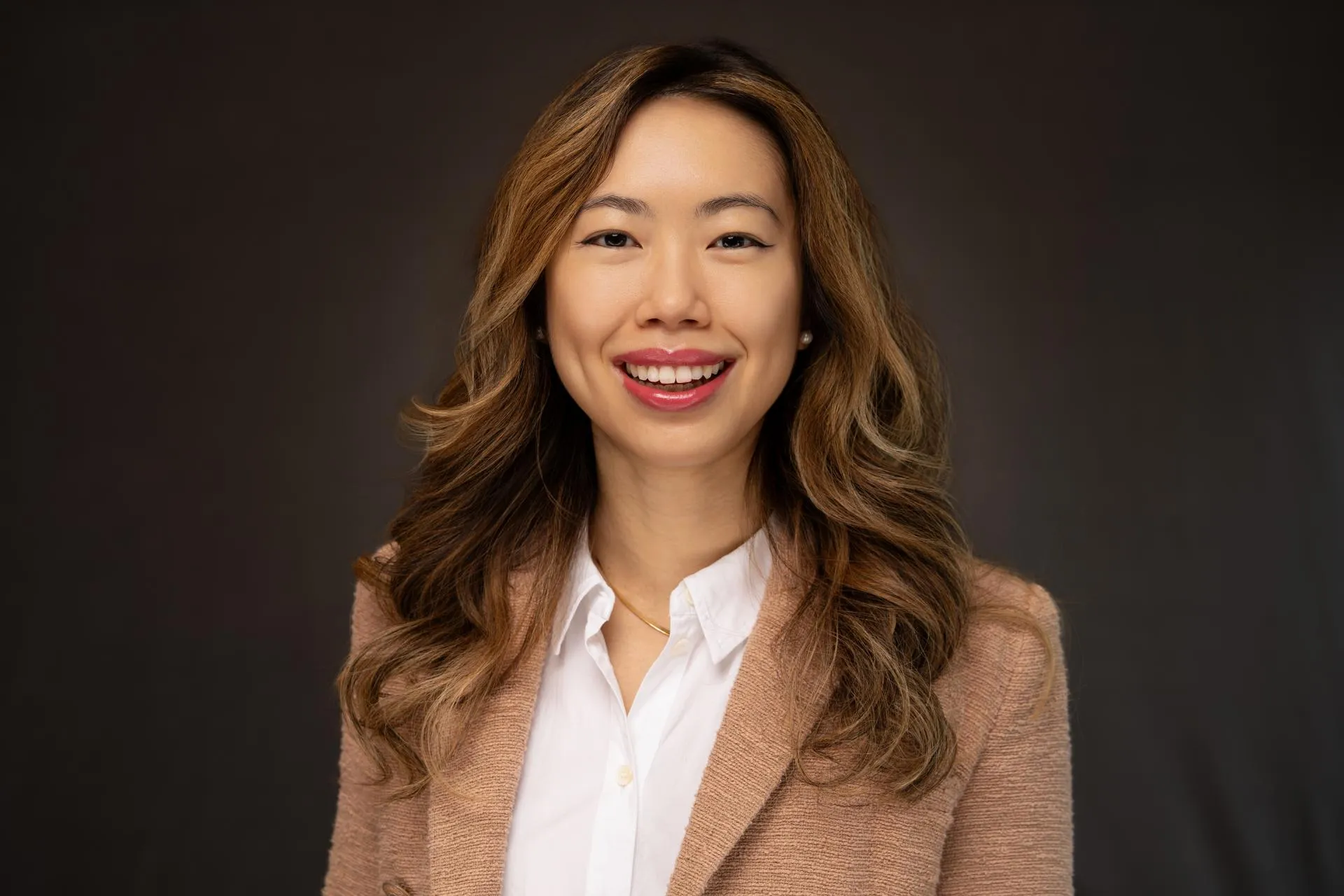
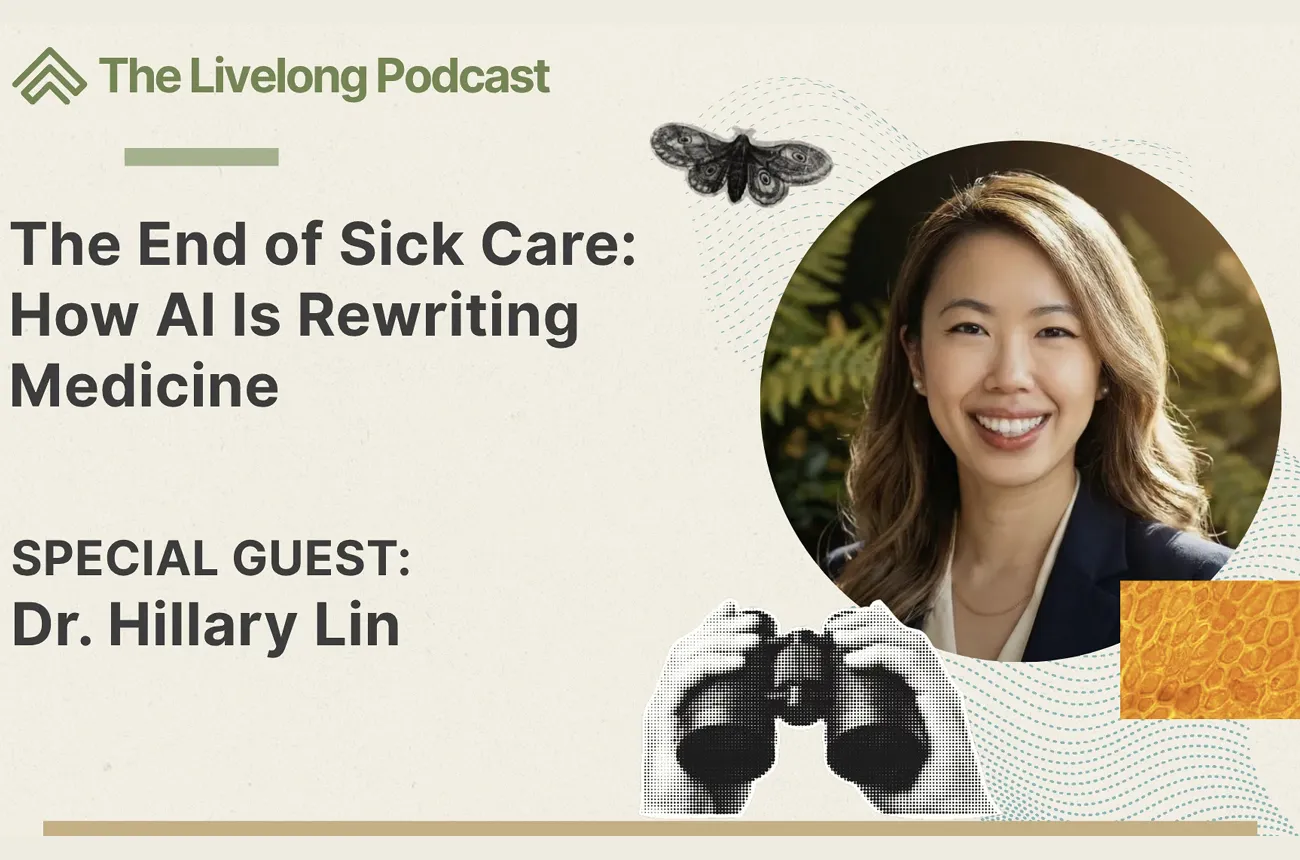
Healthcare is undergoing one of the biggest transformations in modern history. In this episode of the Livelong Podcast, Rachel Lehmann-Haupt speaks with Dr. Hillary Lin, a Stanford-trained physician, entrepreneur, and co-founder of CareCore, about how AI, personalized medicine, and new care models are reshaping the future of health.
For decades, the healthcare system has been built around treating disease after it appears. But a new generation of clinicians and entrepreneurs are working to build something different: a system focused on prevention, longevity, and individualized care.
Dr. Lin explains how new infrastructure platforms like CareCore are helping doctors deliver personalized medicine at scale by integrating labs, prescriptions, pharmacy fulfillment, and patient data into a single system.
We also explore the promises and risks of AI in healthcare, the difference between longevity hype and real science, and what patients should understand as medicine moves into a new era.
What You’ll Learn:
✅ Why healthcare is shifting from reactive medicine to longevity care
✅ How AI may transform personalized medicine
✅ What infrastructure is needed to scale longevity healthcare
✅ The difference between longevity hype and evidence-based medicine
✅ How clinicians and patients can navigate the next era of healthcare
If you’re curious about where healthcare is heading — and how it may change the way we live and age — this conversation offers a fascinating look at the future.
The Live Long Podcast: Building Healthcare for Longevity
A conversation between host Rachel Lehmann-Haupt and Dr. Hillary Lin, Stanford-trained physician and co-founder of CareCore.
Rachel Lehmann-Haupt: Welcome to the Live Long Podcast, where your health is your power. I’m your host, Rachel Lehmann-Haupt. We’re so excited for this special series of the podcast, where we are interviewing all of the guests who are going to be joining us at the Live Long Women’s Health Summit, which is happening in San Francisco April 17th and 18th. It’s coming up, it’s 6 weeks away. Please join us for, with our guests, Jane Fonda, Dr. Stacey Sims, Dr. Dean Ornish, Dr. Mark Hyman. And if you haven’t grabbed a ticket yet, use the promo code RACHEL, and you will get $50 off. We have our special guest here today, Dr. Hillary Lin. We’re discussing the question of what would healthcare look like — traditional healthcare, the doctors that you go to every day — look like if it was built for longevity? Dr. Hillary Lin is a Stanford-based physician, trained physician, and she’s an entrepreneur, and she’s the co-founder of a company called CareCore, a platform designed to help physicians, clinicians, deliver scalable, personalized care. Welcome, Dr. Hillary Lin.
Dr. Hillary Lin: Thank you so much for having me here today, Rachel. I’m so excited.
Rachel Lehmann-Haupt: You are so welcome, and thank you for coming. So let’s just jump into it. You’re trained as a neuroscientist, an oncologist, a primary care physician. Where does the traditional healthcare system fail for people who want to protect their long-term health?
Dr. Hillary Lin: Yeah, just you saying it out loud, it reveals that I’ve been so disenchanted with a lot of the things I’ve seen in the traditional medical field that I’ve hopped around a little bit as a result. And the real failure is the way that medicine has been built has been very capitalist, which is not a problem per se, but if you think about it, capitalistic systems serve the people who are paying the provider. So, in the traditional healthcare system, the payer is the insurance provider. And so, the health insurance system serves the insurer, and not actually the patient at its core. So, there’s a lot to go into there, but that’s the reason why medicine is reactive, and why we don’t emphasize, and we don’t pay for preventative care quite as much as it really should be emphasized.
Rachel Lehmann-Haupt: It’s true, and you are now leading a company called CareCore, so let’s talk about it a little bit. What’s the problem that you’re trying to solve, and what’s going on behind the scenes?
Dr. Hillary Lin: There’s definitely so many reasons why we created CareCore, but there’s two main ones. The very first, most important one is we have a mission of democratizing longevity care. Longevity-style medicine, preventative medicine, personalized medicine. And the second piece is we’re following the trends, like where people are going. We see now that so many people are losing trust in traditional institutions. They’re no longer looking to, you know, the quote-unquote Mayo Clinics of the past, but more looking towards social media creators and brands. And I think there is a beautiful intersection there. I believe clinicians, scientists, people who have the know-how, and also the ability to communicate over social media, create wonderful content that really resonates with the consumer, the patient, the everyday person — that is where the magic is happening, and that’s where people get 85% of their health information according to recent surveys. And so, we’re pairing those two missions and revolutions happening together to create an infrastructure that helps promote the creator medfluencer, so to speak. And at the same time, allows that person to run, essentially, a scaled longevity clinic. And we do that by abstracting away the operations that, honestly, nobody wants to deal with. Not even doctors who own clinics want to deal with the operational difficulties of hiring, managing tons of people behind the scenes, documentation, etc. So that’s what CareCore is taking away from the plate of these medfluencers, these doctors, clinicians, and so forth. And as a result, it humanizes the relationship and allows a creator — who might be a health coach, who might be a doctor — to spend more time communicating with their audience to coach one-on-one and to consult.
Rachel Lehmann-Haupt: So, you’re helping the doctors create the content to reach the audiences directly, so they understand what the doctor’s point of view is?
Dr. Hillary Lin: That’s a part of it, that’s a part of it, but actually, probably the more impactful part is that we’re just taking care of things like — these are details that probably no patient has ever imagined their doctor thinking about — but like membership management for subscriptions and payments and refill management, prescription management, medication fulfillment. All of that is actually very arduous for, let’s just take the example of a solopreneur doctor, someone who is maybe one to five doctors in a private clinic. The reason why those are so rare is because they have to set up an entire infrastructure to run pretty complex operations. So we’re basically making a turnkey clinical infrastructure for anybody, so that they can focus on the real human piece of it, which is that communication, the coaching, the consultation.
Rachel Lehmann-Haupt: Wow, that’s so interesting. When you talk about large healthcare systems, in a way, this movement towards sort of smaller solopreneur doctors that are offering more time for their patients — you’re creating the infrastructure that a traditionally large healthcare system, like the Mayo Clinic you mentioned, would all have in-house already.
Dr. Hillary Lin: Yeah, and the reason we can do that today is purely because of advancements in AI technology, and I don’t want to spend an hour on it, although it’s my deep passion, but it truly is the difference between what was available yesterday versus today. Right now, we are in this age where suddenly it’s possible to automate so many things that were previously complex, complicated. Even in the last month, we’ve seen the revolution of agentic AI finally take fruition, and that has even transformed how we’re building. I feel so fortunate to be building a tech-forward company in today’s day and age, because it’s magical, the way that you can take previously very complicated, very slow problems to solve, and just make it turnkey.
Rachel Lehmann-Haupt: So, let’s get much more specific. Where can AI genuinely improve healthcare delivery, and where is the hype now? Because everybody’s sort of talking — I mean, very few people I know haven’t asked a medical question of their AI agent. But do you really trust what the agent says yet? And you also say, well, what’s the role of a doctor if it can answer these questions in the future? So where can it genuinely improve healthcare AI, and where do you think it’s still a little bit hypey?
Dr. Hillary Lin: Yeah. I think that, actually, AI will only continue to get better. You’ve probably heard the term, like, AI is only as stupid as it is today, and it’s only gonna get smarter. So I’m all in, very bullish on it improving, and absolutely, it’s going to take over most knowledge fields in terms of being the most accurate source of information, and I don’t doubt that. It doesn’t mean that we won’t have doctors in the future, it just means that our relationship with patients needs to change. We are still the core person to synthesize all that information. And actually, I was going to talk about this with the longevity model. So, if you think about the way a primary care clinic works today, it’s a lot of administration. You spend about 3 to 5 minutes with a patient, and you’re basically just knocking down a checklist of things that you need to do to get the highest level of insurance reimbursement, and that’s very sad for everyone involved. The doctor also doesn’t want to be doing that. But in an age where AI — and this is where AI is the very best — it takes care of all of that administrative nonsense, essentially, the doctor can now have 30 minutes, 90 minutes even, to sit down and really understand the patient. And not just understanding, like, oh, this is when your symptoms occurred, and this is what your diagnosis is, but understanding what is your life context? What are your goals? And not just assuming that everybody has the same exact goal. And understanding what is a person’s fears. Like, a simple one that I come across a lot is, some people are very scared to start a medication. Say, for example, they have a heart disease history in their family, and they’re so scared to start a medication that they have to take for their whole lives. And there’s a long conversation I usually have to convince them, like, why is it that you have that fear? What does that mean for you? What is it about a prescription medication that’s so scary, whereas you’re taking a probiotic every morning, and that’s not scary? So that piece of the consultation, I think, will finally have more time to do, and the AI in the background can do the evaluation based on that. So if you know the patient’s goals, you’re designing the plan with the patient, then you take it back to the AI and be like, okay, the patient really doesn’t like injections, or the patient really wants to be strong at age 90 and is willing to spend like 3 hours a day towards that goal, then you actually can use AI as a very valuable tool while the humans are designing the goal and the mission.
Rachel Lehmann-Haupt: Right, exactly. It’s like the doctors become more strategic while the AI synthesizes the data, and that’s really where what is missing in medicine, period, right now — time, the human touch. So you’re saying that AI can take care of all of the — I mean, it’s funny, I watched that medical show that I think people are watching everywhere, The Pitt. There’s a scene in The Pitt where a doctor is charting with AI because they’re trying to make the hospital more efficient. And then AI makes a mistake in the charting, and another doctor reads it incorrectly, and they say, hey, that’s not what this patient is. So we also have to be careful, because again, as you say, AI is only as stupid as it is today.
Dr. Hillary Lin: Yeah, yeah, I think there’s definitely — you need to double-check it still. We’re in that era. And anybody who has worked, and this is not even just in medicine, anybody who has been working with agentic AI harnesses today, like OpenClaw, which is very popular, but there’s so many of them coming out, you’ll notice that most of your activities with the AI include just correcting it. You’re, like, micromanaging the AI right now. But it is going to get better, it’s going to understand our sentiment a lot better in the future, but right now, we absolutely have to keep our eyes on the ball.
Rachel Lehmann-Haupt: It’s true, and at the same time, we’re making this move into this idea of health span now, and longevity medicine, and really what that’s about — it’s about doctors changing the perspective, and patients changing their perspective to focus on long-term health, as opposed to fixing what’s immediately the immediate disease. I mean, I worked with Dean Ornish for years, and it’s like — we live in a sick care system now. We work in a sick care system, which is what he drilled into me. And now, we’re focused on health span, long-term health. But it seems that longevity medicine is really for the elite now. It’s expensive, it’s often not covered by insurance, most of the conferences are very expensive to go to. You sort of get this idea of, like, the tech bros, they’re really super into it, and I think what’s gonna really make longevity medicine important in the future is to scale it to regular people that can afford it, and I want to understand how you see that happening.
Dr. Hillary Lin: Yeah. Well, I want to answer that with a paradox, which is that the cheaper we make longevity medicine and more accessible, actually, the better business it is.
Rachel Lehmann-Haupt: I love that.
Dr. Hillary Lin: Yeah, and it sounds paradoxical, right? Because there’s concierge practices. I know many of the concierge doctors in the U.S., there’s not that many. There’s maybe 20,000 if you count DPCs and the more expensive concierge docs. And the recurring theme is, everybody always is trying to figure out, how can I charge $100,000 and make millions of dollars. That’s what many of these concierge doctors are thinking. And I’m like, actually, if you manage to make your business more scalable and more accessible, let’s say bring it down to $1,000 a year — that’s so cheap, actually, if you think about it in context of everything else you spend on. Most people spend more than that on supplements and wellness, and that becomes so much more accessible. You use automation to take away all of the dirty work, essentially, and you spend time with your panel of a few hundred. I mean, you can even see a thousand — I don’t think most doctors want to see a thousand plus patients over a year, but just saying, you’ll have time to do that, and then every single physician, solopreneur, clinician will be a little health tech business of their own. Because right now, I look at what big companies, VC-backed companies — because I’ve run a VC-backed company before, I know what the pattern looks like — and every single doctor, technically, could do that. It doesn’t require a whole team anymore. You can use what’s available at our fingertips to create, essentially, what used to require millions of dollars to stand up, used to require a whole team of people that you would have to hire. So, basically, long story short, we can make longevity medicine both much more accessible and also a much better business. We just have to teach the clinicians the tools, and/or the other direction is teach technical people the medical tools. I still am a little bit on the fence which one’s easier, but my hope is that we can give clinicians the tools.
Rachel Lehmann-Haupt: Well, I think that’s terrific, and I think — but let’s talk a little bit more from the patient perspective, because if the business works, then the patients are going to get better care, right? So, what does actually longevity medicine mean in practice? How does it differ from traditional medicine from your perspective?
Dr. Hillary Lin: Yeah. Longevity medicine is just good medicine, practiced much earlier. The problem is, in the traditional medical system, most doctors don’t have the time, or the tools, or actually, they’re not even allowed to practice that kind of medicine. Because I just remember when I was working in the traditional system, a lot of times you want to do something, and your managers or the administration, they’re telling you, you cannot do that. Or you’re fighting — I was an oncologist, and a lot of the time is spent on the phone, talking or arguing with the insurance company, like, you must cover this treatment for this cancer patient because it’ll lengthen their life. And it’s so sad that that’s what we have to do, and we end up spending way more time in the workroom doing stuff like that, rather than being with the patient. And obviously, in oncology, it’s terrible when we have to do that. Some of my colleagues who are still working in oncology, they see 40, 80 patients sometimes in a single clinic day, and these are patients who have a life-threatening illness and are dealing with deep emotions. And so, bringing it back to what this means for the patient is we need to give patients more time with the doctor. And longevity medicine is really good medicine, and the issue that I think most people don’t get is that, if you sit down with a doctor today who’s been trained in the traditional sense, trained at a traditional medical center, they’re not actually going to know the best medicine. And it’s not because they’re stupid, it’s because medicine as an infrastructure has been captured by the many parties. It’s the insurance system, the pharma companies, yes, and as a result, we practice medicine in a very distorted way in the traditional system right now. So, those doctors, clinicians who have chosen to take on the challenge of starting their own practices, going into longevity medicine — it’s an entire re-education, and it’s really difficult. You also have to be careful, because I see all the time, there’s this cottage industry where doctors go to conferences where other doctors are teaching them things, and they’re not always right either. And so, I actually think both doctors and patients alike could benefit from a lot more research assistance by AI tools, because then you can go straight to the data, the evidence, which is the scientific papers. And sometimes people say, oh, it’s not yet in papers, it’s early medicine. I would always say with a caveat, yes, some things that are being purported are not yet studied. You know, people are gonna bring up peptides, and it’s gonna become a whole thing. But it doesn’t mean that we ignore it completely. You still can look at scientific papers to look at mechanisms to back it up, or even animal models if you have to. There’s always some evidence you can point to to practice the best form of medicine, even if it’s not, like, a formalized, double-blinded RCT.
Rachel Lehmann-Haupt: Right, but AI is really only as good as the information that’s out there. So, in a way, you also have to sort of get to the base of the problems in the system, and that, in a way, means medical schools changing the way that they teach medicine.
Dr. Hillary Lin: Yeah, yeah. Yes, ugh, it’s so sad because it’s hard to change medical schools. There’s many reasons, but one big one is medical schools, at the core of their job, is they have to train students to pass the boards. And the boards are these ridiculous exams. If you’ve ever heard of any doctors talk about them, you sit down for one, sometimes two entire days. And I remember, one of the board steps, they call them, you actually had to do two days of testing, and then a third day of travel to a location because there was a live exam, and I was just like, this is an utterly ridiculous way to ensure that your doctor knows what they know, because these are just multiple-choice question-type tests about the most esoteric-type things, and they’re trying to give you gotchas to make sure that you’re paying attention to very esoteric details. And those are exactly the questions that AI actually is very good at answering, and we should really be training doctors and actually patients — I think everybody needs better critical thinking. It’s not about memorizing, it’s about evaluating what’s in front of you and determining if it’s true or not. So anyways, that’s why medical schools right now are the way they are. There are some new programs coming up. There was that new program right now — I wrote about the Walmart heiress. She funded an entirely new medical school, which is undergoing, I believe, their first class, and they have a focus on lifestyle medicine and the arts, the humanities, actually, and really that behavioral piece of medicine, which I think is going to be so incredibly valuable in today’s day and age.
Rachel Lehmann-Haupt: Wow, win one for the humanities! Everybody’s so afraid that AI is gonna take away the humanities, and I just love the fact that you are not only saying that it won’t, but that we actually need it to make better doctors.
Dr. Hillary Lin: Yes, absolutely.
Rachel Lehmann-Haupt: So, just a little bit more brass tacks. What tests or insights really change patient behavior in longevity medicine versus just generating a lot of data?
Dr. Hillary Lin: Yeah, so, starting with what are the very, very biggest problems — what are the biggest threats to one’s longevity? So, I have 4 big pillars, and there’s gonna be a lot more, but there’s 4 very big ones. One is your metabolic health. So, said simply, is your body producing energy efficiently, or is something like insulin resistance quietly building? 97% of Americans, according to analysis of lab tests being done in the country, are metabolically unhealthy, and I was one of them. So even at a very young age, I found that I had really distorted lipid panel levels, and it’s because of family history. My own personal journey was triggered because my father underwent an extremely horrible heart attack experience. He needed a heart—
Rachel Lehmann-Haupt: That’s driving.
Dr. Hillary Lin: No, thank you. And, you know, in the very same year, my grandfather passed away from a stroke, my aunt passed away from an aortic dissection. These are all related to the same process, this atherosclerosis. And I was like, oh my gosh, I feel so young and healthy. But then I went and did a deeper check than what you would normally get, and found out, oh, my cardiometabolic numbers are really off, and it’s very genetic. And that’s the case for most of us. Actually a lot of the behaviors that we blame, it’s a lot of genetics. So that’s one. And I’ll get into the specifics after, but number two—
Rachel Lehmann-Haupt: Four pillars. Many more are coming.
Dr. Hillary Lin: Yeah, metabolic health is one. Cardiovascular fitness — so that’s not just the cholesterol, the atherosclerosis I was talking about, this is more about what is the power of your cardio system, your heart and your lungs, and so people hear about things like VO2 max and so forth. And then there’s, of course, cancer screening. Cancer is still a big black box in most cases. I encourage people to go way beyond standard guidelines. Standard guidelines are so limited right now, and people have different risk profiles. Like, in my family, I have 6 family members in recent history — people I knew personally — who either passed away or at least had cancer, and so it’s a really big deal in my family, and we have to go beyond what is available according to population-based guidelines. And then there’s your cognitive preservation, your brain. Your brain health starts decades before symptoms, and it’s a little bit related to everything else we’ve talked about before, but it absolutely — these are all really important. So, to state them again: metabolic health, cardiovascular fitness, cancer screening, cognitive preservation. And the actual tests are actually quite cheap compared to what people are imagining. So, for cardiovascular health, for example, atherosclerosis, you might have heard of ApoB. ApoB is the number to check. It calculates, essentially, all of the atherosclerotic particles that are available to create plaque in your body. So, you gotta get that checked. For some people, Lp(a) is going to be very important. You only need to check it once in a lifetime, but I’ve seen it so many times pop up in all populations. We classically say South Asians have a lot of lipid genetic issues, but I’ve seen it in all populations, so everyone just needs to get that checked. It is an independent risk factor for stroke, heart disease, so forth. And then, fasting insulin. So you might have heard of hemoglobin A1C, that’s good to check, but fasting insulin comes up way earlier, and it’s so easy to check it. You don’t need to do anything crazy, you just get a blood check. And if it’s above a certain number — optimally is under 8, basically — if it’s above that, that means you’re starting to see problems with insulin resistance. And I’ll even say, even myself, I’m somebody who uses a CGM every so often, but due to genetic reasons, I have to be quite careful. I’m on a low-carb diet and some medications. And so we talked about those — those are the big three cardiometabolic health ones, and for women and men, hormone levels of different kinds are really important. Everybody should always check their lipid, their thyroid panel, for example. So, that’s your TSH, your T4, free T3, and also for both men and women, we want to pay attention to testosterone. Not just your total testosterone, but also the bioavailable or free testosterone. And take that into account with your symptoms. For women, particularly, we’re going to pay attention to a lot more details, like your AMH is so helpful because it’s a good screening for if you’re going to experience something called premature ovarian insufficiency. So, I’ve seen that so much these days. We used to see that only rarely, like in cancer patients who undergo chemotherapy, your ovaries kind of give out early, you undergo menopause early, but I’ve seen now, several times, women in their 20s and 30s who look like they’re undergoing menopause, and there’s no apparent reason, and I couldn’t tell you exactly why. I suspect it’s environmental, but I think that’s really important for people to do. There’s some related blood tests to that, like your FSH, your Day 3 FSH, and so forth. So those are some really, really big ones that I think everyone needs to pay attention to. Oh, and I’ll mention one more. HSCRP, that’s highly sensitive CRP. That detects your inflammation, and it’s highly sensitive, so you can use it pretty early on.
Rachel Lehmann-Haupt: Inflammaging. This is a word that everybody should know about and pay attention to. A big part of longevity that I’ve learned that really traditional doctors don’t talk about that much.
Dr. Hillary Lin: Yeah, and again, it’s not because inflammation is bad, it’s chronic inflammation that causes that inflammaging, which is bad. And it’s not so much what people used to believe. Like, if you remember nothing else, just remember that health is holistic. Everything is tied to each other. Inflammation is tied to your metabolic health, or lack thereof, your insulin resistance. We see that come in hand-in-hand, and a lot of times it’s related to a lot of other problems. So just to name one syndrome, PCOS. We talk about it so much nowadays because it’s so much more common than it used to be. And PCOS itself, by the way, is still a very mysterious syndrome. We don’t know if there’s a gene that causes it, or if there’s like a biological, physical thing event that’s causing it, but we do know that it pulls together all these common problems. It’s insulin resistance, you gain weight, you have inflammation, and you also have infertility that comes upon. And that’s, like, a really good example of a modern-day longevity threat and common issue that we’re seeing in healthcare everywhere.
Rachel Lehmann-Haupt: Wow, that is so interesting. So, okay, what’s one decision that somebody who’s listening today could make that you think could improve their long-term health trajectory for men and for women?
Dr. Hillary Lin: Oh, one — oh, gosh.
Rachel Lehmann-Haupt: I know, I’m, like, writing it down, I’m like, I want to go out and get all these tests next.
Dr. Hillary Lin: I know, I know! And I forgot to even mention, everybody should also do something to get to know their body composition and check their visceral fat versus their muscle and their bone density. Okay, so, but the one thing I would encourage everyone to do is exercise and move. And it’s because it’s tied to everything I’ve talked about.
Rachel Lehmann-Haupt: Get outside every day.
Dr. Hillary Lin: Yeah, yeah, just do something. If you’re like me, and I don’t get outside, technically, but I work my life around the fact that we need to move. I have an under-desk treadmill, I walk 2 miles on it, and then I go to the gym, and then I’m like that sort of wacky person, I’m walking uphill at Zone 2. And actually, there’s a lot of people at my gym who do this now. We go on an incline, we’re walking, we’re doing our Zone 2, while people have their laptops, they bring their books, like, it’s like a hilarious situation. But it’s because we simply don’t move enough, and Zone 2 is one of those highly efficient zones, because you’re doing oxidative — basically, it’s a type of fat oxidation zone that helps you get rid of fat, everyone loves that, but it’s also training your body to be more metabolically flexible. And then the second piece of cardio movement, or cardio exercise, would be interval, like HIIT type of interval exercise, where you’re going really, really high intense, and then rest, really high, and then rest. And then, of course, resistance training. You need to have both. Like, people argue on social media, cardio versus resistance. I’m like, you absolutely need both. There’s not a question. And it tends to be that women tend towards the cardio more, rhythms or the routines, and then men tend to ignore their cardio, and then they’re all trying to build muscle and strength train. But both need both, and it actually helps both. So, like, my partner, he’s a guy, and he cares a lot about muscle hypertrophy, and he ignores his cardio. But you end up getting tired a lot more if you’re just building muscle and not training your heart, your cardiovascular, your cardiorespiratory system to compensate for that. And then also, if you’re trying to do body recomposition — so a lot of people, when they’re talking about weight loss, they mean fat loss. So, you want to get rid of fat, build muscle, then you actually do need the cardio as well. All those steps that you’re taking are extremely helpful for those goals. So, if you have one main takeaway, it’s you absolutely need to move more. If your health means anything to you, it needs to be the very first priority.
Rachel Lehmann-Haupt: Well, that is such great advice. I love the fact that you talked about the global healthcare system that needs to change, and you talked about specifically how we can improve longevity health, not just for the elite, but for everyone. And I really appreciate you joining us today, Hillary. Thank you so much.
Dr. Hillary Lin: Thank you!